The prompt-first pass
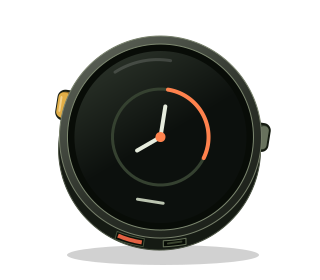
The original build below records how this idea first worked. The durable lesson now targets the M5Stack Stopwatch and lives in the prompt, behavior contract, generalized tests, and hand-review checklist. Generated firmware is evidence for those sources, not the source itself.
A metronome is a stopwatch with opinions about when to speak.
The whole build is day 12’s one rule — clocks are arithmetic — under a musical deadline. A stopwatch that renders late shows a stale number and nobody dies. A metronome that clicks late is worse than no metronome, because a musician trusts it with their hands.
delay() is a tempo rubato
The naive loop — click, delay(interval), repeat — doesn’t keep tempo; it keeps tempo plus overhead.
Every iteration silently adds the cost of rendering, button polling, serial chatter.
At 120 BPM with two milliseconds of loop cost, you lose a full beat every four minutes, and you lose it gradually, which is the worst way.
The absolute schedule can’t do that.
nextBeatMs += interval fixes each beat to a grid laid down when the transport started.
A slow frame makes one click late; it cannot make the grid late.
Errors stay errors instead of becoming policy.
The median forgives one bad tap
Tap-tempo is the day’s second timing instrument, pointed the other way — measuring the human instead of pacing them. Humans tap sloppily. Four taps give three gaps; taking the median means one rushed or dragged tap changes nothing at all, where an average would smear it into the tempo.
The detail that makes it feel right: setting a tempo re-anchors the beat grid to your final tap. You tap-tap-tap-tap and the metronome comes in on your next beat, in your time — the machine joins you, not the reverse.
Accent is hierarchy you can feel
The downbeat gets a higher pitch, a longer buzz, a harder vibration — day 11’s three-axis feedback code applied to musical structure. With the speaker covered, bars are still countable by feel alone, which is the difference between a metronome and a drum machine for practice in loud rooms.
The pendulum dot exists for the eyes-only case: it sweeps once per beat and alternates direction each beat, because the mechanical original did, and a century of musicians already knows how to read that motion.
What we learned
delay()keeps tempo-plus-overhead. Absolute schedules keep tempo; late beats stay incidents instead of becoming the new grid.- Medians forgive humans. Three gaps, middle value — one bad tap costs nothing.
- Join the player’s time. Re-anchoring the grid to the last tap is one line and the whole difference in feel.
- Accent is structure, not decoration. Pitch, duration, intensity — the downbeat should survive a pocket.